


This article investigates the integration of neuromarketing and artificial intelligence (AI), highlighting their synergy to transform consumer insights and marketing campaigns. It examines how AI-enhanced neuromarketing, focusing on predictive emotional response analysis and the application of tools, redefines advertising efficacy.
Introduction
AI has revolutionized how businesses operate and how customers interact in the past few years. The convergence of neuromarketing and artificial intelligence is transforming consumer behavior analysis by offering unprecedented predictive capabilities and insights into the subconscious drivers of decision-making (Pérez et al., 2024). This integration enables a deeper understanding of consumer preferences by leveraging neuroscientific tools, such as electroencephalography (EEG), biometrics, and eye-tracking, alongside advanced analytical techniques, including neural networks and machine learning (Bhardwaj et al., 2024). Thus, neuromarketing has experienced significant improvements in tools and research methods (for example, predictive eye-tracker integrated with AI). AI generally enables businesses to gather data on customer preferences and behaviors, empowering them to create more effective marketing campaigns (Movius, 2023).
Neuromarketing
Neuromarketing was introduced in 2002 by Dutch marketing professor Ale Smidts as “the study of the cerebral mechanism to understand consumer behavior to improve marketing strategies.” (Lim, 2018). As a field, it emerged in the early 2000s. As stated by Mansor & Salmi (2020), neuromarketing comprises three fundamental domains: neuroscience, marketing, and psychology. In essence, neuromarketing allows marketers to execute more deliberate strategies, ultimately improving the overall effectiveness of their marketing campaigns. Additionally, neuromarketing is an interdisciplinary field that uses neuroscientific techniques to examine the psychology of human behavior, empowering businesses to better understand customer choices and motivations (Bhardwaj et al., 2024).
Neuromarketing Research Areas and Tools
While traditional marketing research instruments are widely used to analyze consumer behavior, they may yield only limited insights. This is because a significant portion of the decision-making process occurs subconsciously, and the data are self-reported. Therefore, traditional survey methods can be limited in their ability to capture accurate information about consumer behavior. Participant responses could be affected by conscious or subconscious biases arising from stereotypes, cognitive biases, emotions, social and moral norms, or the inability to articulate their thoughts, feelings, and motivations for purchase. The debate over whether neuromarketing research will supersede traditional market research continues. A widely held perspective is that both forms of research work in tandem, accessing various levels of consumer information, including both subconscious and conscious aspects (Bitbrain, 2019).
Neuromarketing is mainly employed in six principal areas. The range of neuromarketing research includes label and package design, testing of video and print advertising, product placement on shelves, and analyses of the consumer journey within shopping centers (Bhatia, 2014; Kolyovska et al., 2016).
Moreover, neuromarketing is increasingly versatile – research covers music, user experience (UX), video games, remote learning, beverages, public campaigns, and the role of color psychology in advertising.
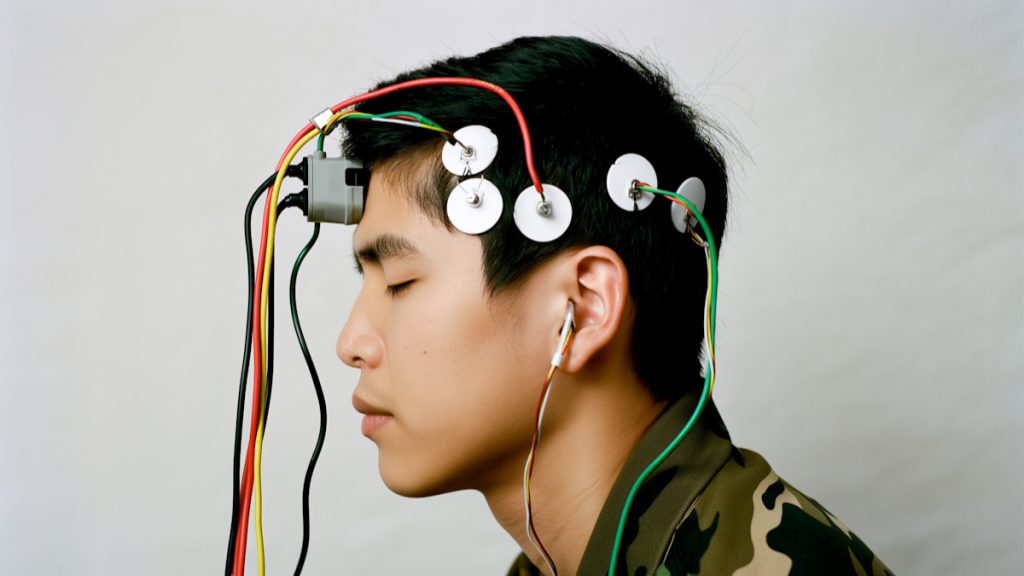
The tools used in neuromarketing are extensive, ranging from functional magnetic resonance to eye-movement recording via sensor technology (Nazarova & Lazizovich, 2019). The most common neuromarketing tools include eye tracking, facial coding, electroencephalogram (EEG), and galvanic skin response (GSR). Eye-tracking technology allows for the observation of eye movements. For instance, individuals participating in research can now stroll past store shelves equipped with glasses that monitor the locations and durations of their gaze on specific products. Facial coding provides a better understanding of the transmission of six basic emotions: happiness, surprise, anger, contempt, sadness, and fear. For instance, Disney is a pioneer in using facial recognition among marketers. The technology has been used to read moviegoers’ faces while watching a film (Bansal & Gupta, 2022). EEG is among the most recognized and used techniques in neuromarketing research. Its fundamental principle is to place electrodes on the human skin to measure current pulses associated with neuronal activation (Klinčeková, 2016). GSR is a technique for analyzing responses to various stimuli by monitoring microsweat gland activity.
Key findings: Neuromarketing and AI
Advances in artificial intelligence (AI) and neuroimaging technologies have reshaped marketing’s ability to understand consumer behavior beyond self-reported data. In 2024, approximately 69.1% of marketers reported integrating artificial intelligence into their operational processes, thereby underscoring its widespread adoption and acceptance within the marketing domain. The marketing and advertising sector exhibits the highest adoption rate of generative AI, with 37% of marketers reportedly utilizing these tools (Influencer Marketing Hub, 2024). This integration highlights the necessity of investigating how AI, particularly generative models, can be strategically combined with neuromarketing insights to establish more accurate and ethically robust predictive frameworks for understanding consumer behavior (Khondakar et al., 2024). This proactive adaptation to emerging trends allows businesses to gain a competitive edge. By analyzing neuromarketing data, AI can predict which elements of an advertisement generate strong emotional responses in the audience. As a result, it can suggest aldjustments to messaging, design, or even product features, ensuring a closer alignment with consumer preferences. Some of the benefits of combining AI and neuromarketing include: deeper consumer insights; enhanced personalization; predictive analytics; improved product development; efficient advertising; cost efficiency; real-time feedback; A/B testing optimization; increased ROI; and emotionally resonant content (Pathmonk, 2023).
Implication for Businesses
As neuromarketing and AI-driven analytics advance, businesses can better understand consumer behavior and emotional triggers. Using brain-based insights enables companies to create more targeted campaigns, enhance product design, and refine user experiences. Nonetheless, ethical handling of consumer data and transparency are essential. To remain competitive, brands should responsibly adopt neuromarketing tools, invest in consumer research, and keep a balance between innovation and trust (Pérez et al., 2024).
Conclusion
In conclusion, the integration of neuromarketing and AI presents a transformative synergy that reshapes consumer insights and marketing strategies. The article emphasizes the need for a balanced approach that addresses concerns such as costs, sample size limitations, standardization issues, and ethical regulations. Navigating these challenges necessitates a focus on long-term consequences, transparency in advertising, robust data security measures, and vigilant regulatory oversight. In essence, the article underscores the vast potential of combining AI and neuromarketing, offering benefits such as deeper consumer insights, enhanced personalization, predictive analytics, improved product development, efficient advertising, cost efficiency, real-time feedback, A/B testing optimization, increased ROI, and the creation of emotionally resonant content. As the field continues to evolve, the ethical application of these powerful tools remains crucial, ensuring that marketing practices align with principles that prioritize transparency, responsibility, and consumer well-being.
References
- Bansal, S., & Gupta, M. (2022). Towards using artificial intelligence in neuromarketing. In M. Gupta (Ed.), Artificial intelligence for business optimization: Research advances. IGI Global. https://doi.org/10.4018/978-1-6684-5897-6.ch002
- Bhardwaj, S., Thapa, S. B., & Gandhi, A. (2024). Advances in neuromarketing and improved understanding of consumer behaviour: Analysing tool possibilities and research trends. Cogent Business & Management, 11(1). https://doi.org/10.1080/23311975.2024.2376773
- Bhatia, K. (2014). Neuromarketing: Towards a better understanding of consumer behavior. Optimization, 6(1), 52–62. https://www.researchgate.net/publication/272823068_Neuromarketing_Towards_a_better_understanding_of_consumer_behavior
- Bitbrain. (2019). Neuromarketing research techniques and tools. Retrieved from https://www.bitbrain.com/blog/neuromarketing-research-techniques-tools
- Influencer Marketing Hub. (2024). Artificial intelligence (AI) marketing benchmark report.
- https://influencermarketinghub.com/ai-marketing-benchmark-report/
- Khondakar, M.F.K., Sarowar, M.H., Chowdhury, M.H. et al. A systematic review on EEG-based neuromarketing: recent trends and analyzing techniques. Brain Inf. 11, 17 (2024). https://doi.org/10.1186/s40708-024-00229-8
- Klinčeková, S. (2016). Neuromarketing – Research and prediction of the future. International Journal of Management Science and Business Administration, 2, 54-57. doi: 10.18775/IJMSBA.1849-5664-5419.2014.22.1006
- Kolyovska, V., Maslarova, J., & Maslarov, D. (2016). Neuromarketing. Buy-ology is a masterpiece. Seventh workshop “Experimental models and methods in biomedical research” (Sofia).
- Lim, W. M. (2018). Demystifying neuromarketing. Journal of Business Research, 91(C), 205–220. https://doi.org/10.1016/j.jbusres.2018.05.036
- Mansor, A., & Salmi, I. (2020). Fundamentals of neuromarketing: What is it all about?. doi: 10.31117/neuroscirn.v3i4.58
- Movius. (2023, June 15). Neuromarketing in the Age of AI. Retrieved from: https://www.movius.ai/blog/neuromarketing-in-the-age-of-ai/
- Nazarova, R., & Lazizovich, T. (2019). Neuromarketing − A tool for influencing consumer behavior. International Journal of Innovative Technologies in Economy. https://doi.org/10.31435/rsglobal_ijite/30092019/6664
- Pathmonk. (2023). NeuroAI connection: How neuromarketing and AI complement each other. https://pathmonk.com/neuroai-connection-how-neuromarketing-and-ai-complement/#:~:text=For%20example%2C%20by%20analyzing%20neuromarketing,more%20effectively%20with%20consumer%20preferences
- Pérez, M. Q., Beltrán, E. T. M., Bernal, S. L., Prat, E. H., Campo, L. M. D., Maimó, L. F., & Celdrán, A. H. (2024). Data fusion in neuromarketing: Multimodal analysis of biosignals, lifecycle stages, current advances, datasets, trends, and challenges. Information Fusion, 105, 102231. https://doi.org/10.1016/j.inffus.2024.102231
- Toma, F., Yadete, F., & Kant, S. (2023). Neuromarketing: Integrated Marketing Communication Recent Tool. International Journal of Social Science, Management and Economics Research, 01. https://doi.org/10.61421/IJSSMER.2023.1103